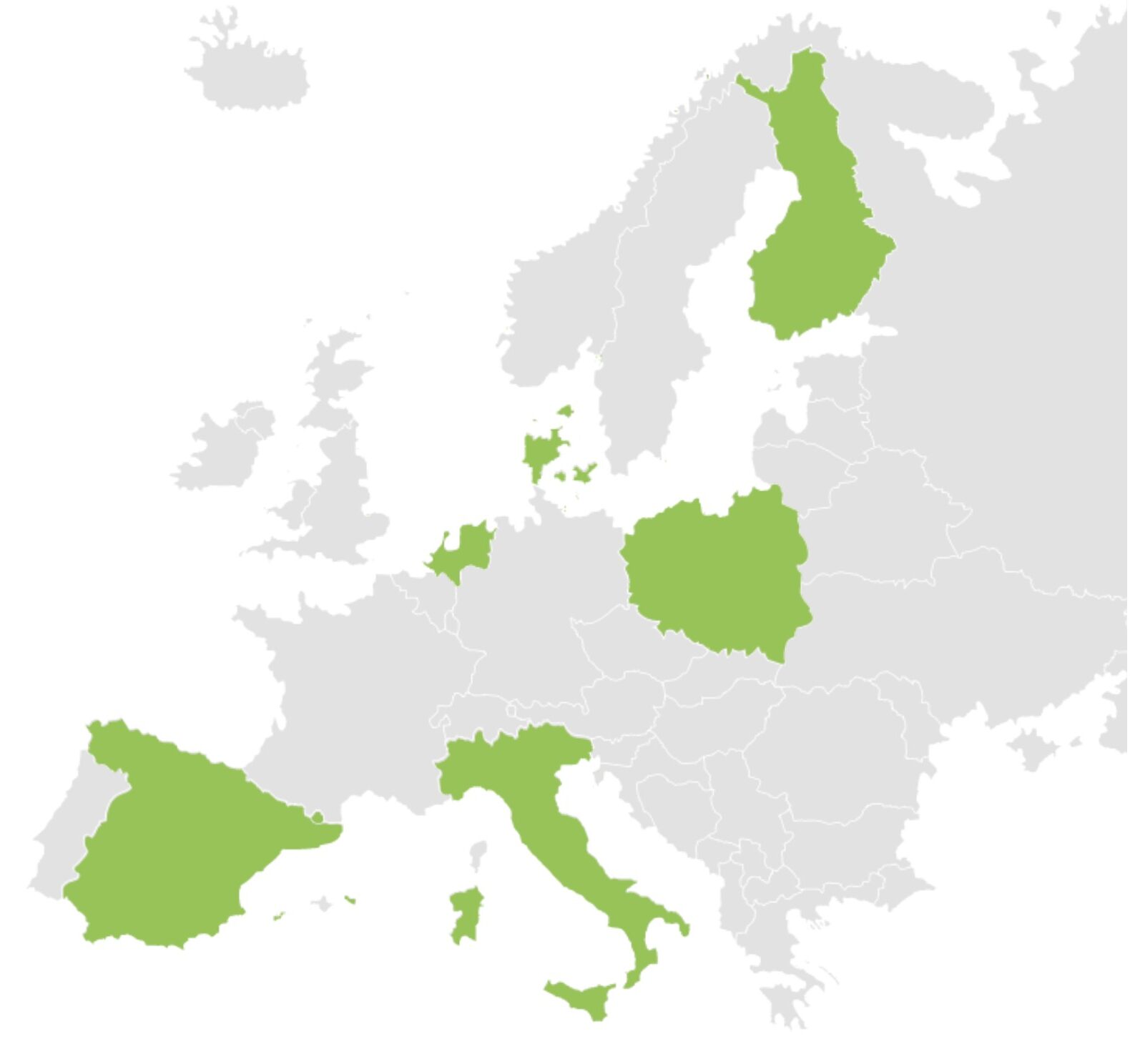
Through EVECSA, local and regional actors in six European countries work together in Centres of Vocational Excellence (CoVEs) focused on Climate Smart Agriculture.
Each CoVE brings together vocational education and training providers, businesses, research and knowledge organisations, and other sector stakeholders. Working at the regional level, they collaborate to improve the quality, relevance and attractiveness of vocational training, making sure it responds to real needs in the agricultural sector.
At the same time, CoVEs do not work in isolation. They are connected across countries through a Platform of Vocational Excellence (PoVE), which supports exchange, joint learning and cooperation at European level.
By linking vocational education with the wider Agricultural Knowledge and Innovation System (AKIS), EVECSA helps turn knowledge and innovation into skills that can be applied in practice.
Cooperation at the heart of the CoVEs
Across the six EVECSA regions, our research has shown that collaboration is emerging as one of the strongest drivers of a successful CoVE.
While Denmark and Catalonia show high levels of cooperation between farmers, VET providers and knowledge institutions, other regions such as Poland and Italy report more fragmented networks, often limited by funding, time, and institutional barriers. Finland stands out for its strong local partnerships between schools, advisory centres, and agricultural businesses, while the Netherlands maintains balanced engagement across all stakeholder types.
While obstacles exist – such as a lack of structured cooperation frameworks, and limited human and financial resources – there is a shared desire across Europe to strengthen public–private partnerships, expand international collaboration, and ensure that education and innovation move in sync with real farm practices.
The data show a clear message:
the transition to climate-smart farming will depend not only on technology, but on people and how well they work together and learn from one another.
What is Vocational Excellence?
Vocational excellence means providing high-quality vocational education and training (VET) that matches real needs in the world of work and is attractive to both learners and employers.
Through its comprehensive approach to skills development, vocational excellence supports innovation, boosts regional and local development, promotes lifelong learning, and builds on smart specialisation.
The EU’s vision for vocational excellence is for VET to:

Integrate
into local skills ecosystems, supporting regional development, innovation, and industrial clusters.

Collaborate
with education sectors, the scientific community, and businesses.

Offer
job-specific and key competences through high-quality, assured training.

Build
innovative partnerships with the business world and foster professional development for staff.
This model helps widen access to high-quality education and training, prepares all learners for work, and contributes to more dynamic, inclusive economies.
The concept of Centres of Vocational Excellence (CoVEs) stems from the European Union, which has been promoting such initiatives to strengthen vocational education and training across regions. CoVEs are designed to build local “skills ecosystems” that go beyond offering high-quality qualifications: they connect training providers, companies, and local authorities to foster innovation, support regional development, and promote social inclusion.
In particular, CoVEs collaborate closely with businesses, especially SMEs, to ensure that training aligns with local and regional labour market needs and encourages entrepreneurial initiatives. They leverage the expertise of each partner to create dynamic, innovative learning environments that support lifelong learning and local economic growth.
For a comprehensive overview of the EU’s approach to CoVEs, including policy guidance and examples across Europe, you can visit the European Commission page on Centres of Vocational Excellence: